
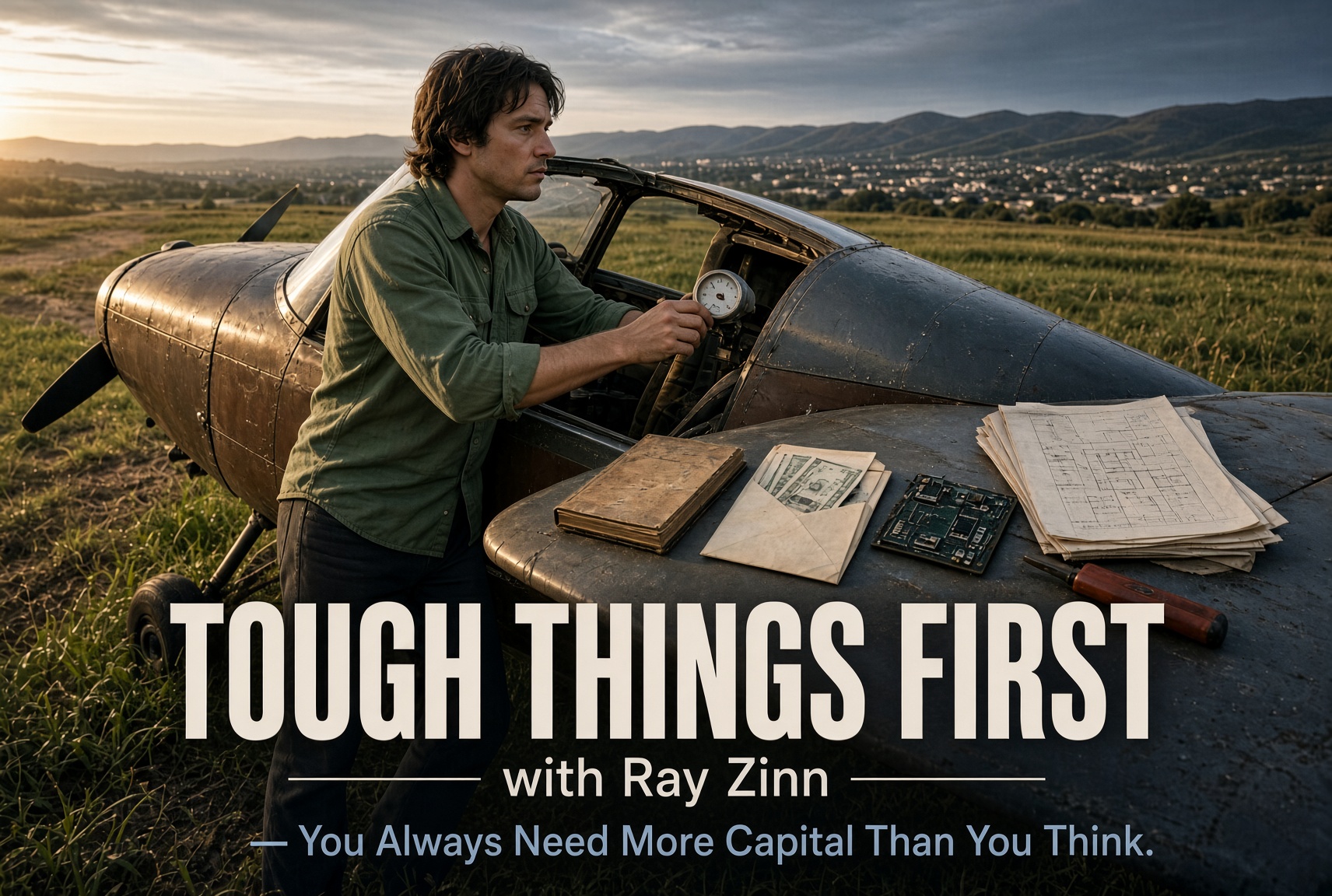
Rob Artigo: Ray, today’s topic is one founder’s learned the hard way, you always need more startup capital than you think. You’ve said if you don’t have enough cash, don’t start. Really just don’t start the business. If you don’t have enough cash to start, don’t start. Like taking off on a trip without enough fuel to reach the destination. We talked about this as your experience as a pilot. There are regulations about these things. Don’t take off unless you know what you’re going to do.
Why do so many entrepreneurs still launch on a number they already know is really tight?
Ray Zinn: It’s that optimistic view. I mean, it’s hard to raise money. It really is. It’s difficult to do. They want to start the company so bad that they’re willing to take a chance, flip the coin, and they’re willing to just bet the farm when they know they shouldn’t. So if your enthusiasm outweighs your financial ability, then you just become a sucker. The key here is not to kid yourself. You know the statement, “Don’t kid yourself.” You look yourself in the eye in the mirror and say, “Don’t kid myself.” Let’s be real. Let’s look ourself in the eye and say, “Do we have the financial ability to pull this off?”
And I think the biggest mistake that most startup companies make is they start without enough capital. They think, “Well, we’ll be highly successful and so it’ll fund itself.” And we come up with all these excuses, reasons why we’re starting off with little or no capital. And so that’s the key, is recognizing, being honest with yourself saying, “Do I have enough capital to make this happen?”
And I think the worst mistake you can make is to be able to start something without the ability to finish it, if you follow what I’m saying. And you brought up the example about flying in an airplane. FAA rules are you have to have enough fuel to take you to your destination plus 45 more minutes to go to an alternate. In other words, to have the ability to pivot, because you never know if you’re going to have the ability to land at your destination, even though highly opportunistically you will. It’s just that that’s not the way the rules are. The rules are have enough fuel to get you to your destination plus additional 45 minutes to get to an alternate. The ability to pivot, and we’re going to talk about that in one of our podcasts is this pivoting ability. Having the ability to pivot takes money and resources.
Rob Artigo: In the early budgeting process, think about people come up short because they underestimate. And where does the underestimation usually hide? I mean, is it in the product taking longer, customers paying slower, the first downturn or the cost of nobody really putting the cost in the spreadsheet, the original spreadsheet?
Ray Zinn: That’s all the above. I mean, you covered them all. You will have economic downturns that you didn’t anticipate. You are going to have setbacks in product development that you didn’t expect, or you’re going to have extra expenses that you weren’t expecting. Again, if we go back to that flying requirement of being able to get to your destination plus 45 minutes. And there’s a reason for that, because it’s deadly if you don’t. And I think we all underestimate what it takes to get to our destination.
I was talking with a fellow the other night about a startup that he wants to do. He wants to do a Broadway show. And so I was talking to his business manager and I asked him questions about what is the average cost to do this? And so he said, “Well, the average is X number of dollars.” And I said, “Okay, then why are you raising only the average?” And he said, “What do you mean?” I said, “Well, there’s a distribution. In other words, there’s some things to go better than you expect and some things to go worse than you expect. And so how much should we have in this startup of doing this Broadway show? How much should we have in addition to the average?” And he gave me a number and I said, “Then why are you guys shooting for the average if you know that you need a buffer?” So I mean, yeah, if you have a knockdown success, you don’t even need the money that you’re currently trying to raise. But if you’re only raising the average amount, you’re making a big mistake.
And so we tend to base things on best case conditions, and that’s the mistake that most companies make. That’s why nine out of 10 companies fail in the first three years.
Rob Artigo: Well, I think along the lines of what you were just talking about here is you were talking about rational frugality, but if you have too much, people will spend it just because they have it. If they have too little, the company will die. How does a founder tell the difference between being disciplined and being under capitalized?
Ray Zinn: Well, we’re back to what I said before. You want to be able to get to your destination. And if you think you’ve overcapitalized yourself, you’re wrong. I don’t know of anyone in my experience has overcapitalized themselves. And if you do, then you just return it back to the investors. Don’t spend it just because you have it. That’s a mistake that most young people make, is that they got their tax return refund back and they got this or that, or they got some money because of some other financial windfall that they had and they spend it because it was a windfall. But I tell you what, you never have enough to start a company. So figure you’re going to need more than you think you’re going to need and therefore you’ll succeed.
My wife and I, when we were first married, we talked about living within our means, which meant we had to have a buffer. And I used a 10 to 15% buffer when we did our budget for our living expenses. Now that was tight because that meant that we had to cut back some because we weren’t living on exactly what I made. We’re living on less than what we made. And as a consequence, that really helped us out because that carried forth for the 65 years that we’ve been married. We never ever lived to the maximum of our income. We lived well within our income.
Rob Artigo: I guess the bottom line is cash is not optional. Companies don’t fail because they have it. They fail because they don’t have it.
Ray Zinn: Don’t have it.
Rob Artigo: Yeah. Listeners can find out more at toughthingsfirst.com. Questions for Ray are always welcome. You’ll also find the podcast archives there and Ray’s books, Tough Things First. The essential leader in the Zen of Zinn series, including the latest Zen of Zinn Daily. Follow Ray on X, Facebook and LinkedIn.
Ray, thanks as always. Until next time, do the tough things first, right?
Ray Zinn: Do the tough things first.
