
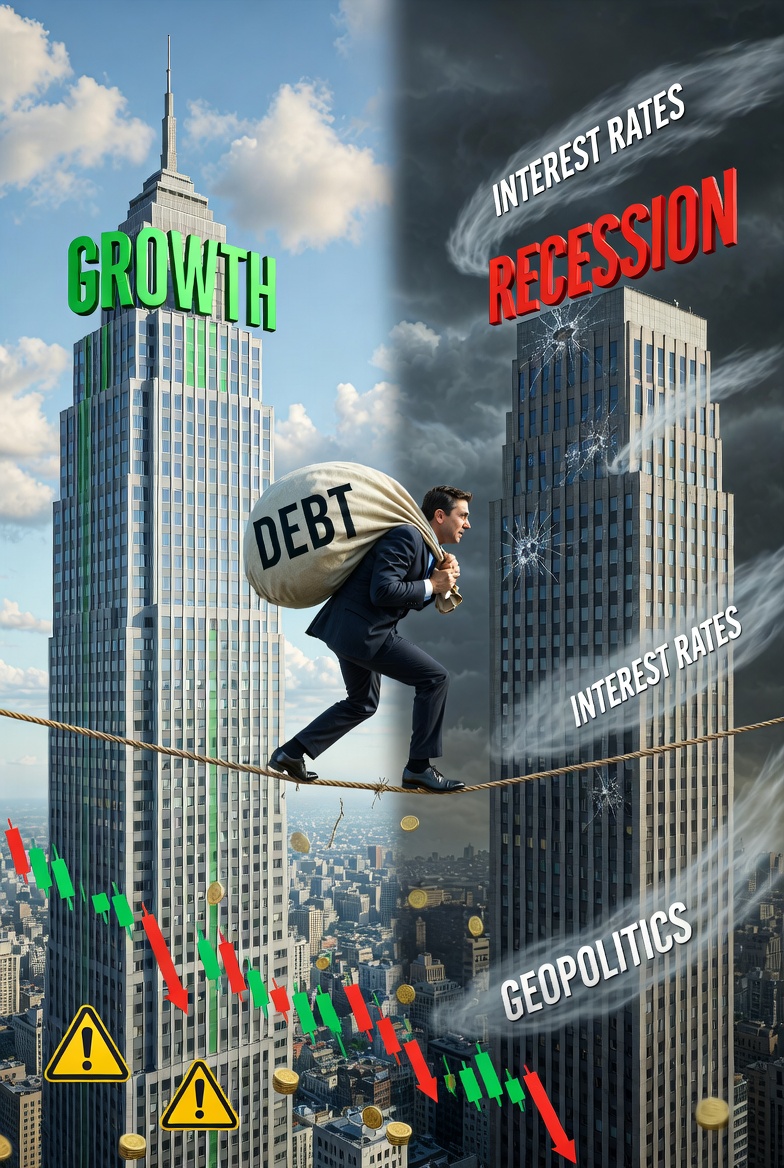
Is the question, “which end is up?” The nagging question is where will this economy end with all that is going on. In this Tough Things First podcast, Ray Zinn puts his well earned economist hat on and cuts through the chaos. – OR – (Watch Now!)
Rob Artigo: Ray, this is a special edition of the Tough Things First podcast. It is on video and I’d like to invite our listeners to toughthingsfirst.com. There is a whole pull-down menu for the podcasts, and we have all the history of our podcasts there, and you can check out any podcast you want. But if you find this one and you look at the little Watch Now button, you can click on that and it’ll take you to Ray’s YouTube channel. And Ray, people will go there and watch, and they usually turn out really, really good. So watch now if you want or just keep on listening.
Ray Zinn: Please share and subscribe to this. We would love your support.
Rob Artigo: Yeah, exactly, exactly. So Ray, you guided Micrel through 37 years, profitable, eight major semiconductor downturns along that time, that’s what I understand, without ever really relying on venture capital. So today we turn the attention to the present economy, which is really wild to navigate.
At the time of this recording, which is late March, just about April 1st almost, it looks like growth is holding at about mid 2% range, and the labor market cooled off a little bit. Unemployment about 4.4%. Inflation remained somewhat sticky above the Fed’s target, and there’s ongoing debate around interest rates, policy shifts.
And of course, Iran is looming large because of the oil situation. It’s not a crisis, but it’s not smooth sailing either, agreed?
Ray Zinn: Yes. Well, because there’s a lot of components to having a good economy. I’m asked often, because I am an economist educationally and also from work, they say, “Well, how is the economy?” And so if you read the news or if you hear the polling and so forth, they say, “Oh, the economy is the number one problem.” And so it’s a focus. When you focus on something, you tend to really put a lot of emphasis on it. That’s why we call it a focus.
Ray Zinn Cont.: Currently, according to the polls, the economy is the number one issue. But there’s something interesting here about this. The stock market is still up and still strong. Interest rates, albeit are higher than we’d like to see them, are kind of the average we’ve had for the last 50 years. The interest rate average over the last 50 years is 4.3%, and we’re a little bit below that. And so here we are. The interest rates aren’t all that bad if you look at it historically.
Labor, the unemployment is kind of where it is. I mean, it’s not terrible. It’s kind of the average of what we’ve experienced over the last 50 years. Inflation is about where it has averaged for the last 50 years. So if you look at all the metrics associated with what we call a stable economy, the economy’s stable.
Granted, we all like to see prices come down. We like to see interest rates come down. We like to see unemployment down, and we like to see gas prices especially down. They were down until a month ago when we had this conflict with Iran.
We need not focus on something that’s not really an issue. Even though the news media would like to conjure it up as an issue and get a lot of press going on it, a lot of people watching the news, as you would, it’s somewhat dishonest because if we look at things in terms of averages, and that’s what we do, then we can compare them with where we are or where we should be.
Honestly, Rob, everything’s kind of normal. I mean, the stock market is doing relatively well. Interest rates are at their historical average, unemployment, historical average, inflation, historical average. And so that should not be a focal point, because you don’t want to focus on something that’s not out of whack, as you would. Even though the news media would cause you to believe they’re out of whack for their own reasons, it’s just not true.
The economy is not the number one issue. In my mind, the number one issue is really this verbal civil war we’re having among political constituents with all this rioting and demonstration and attacks on one another. This is more of a concern to me. We need to figure out how to work together, how to overcome our differences, or at least mitigate our differences, that’s maybe a better way to put it, so that we don’t have these verbal civil wars.
These are never good. Verbal civil wars are terrible, and we can’t keep attacking each other if we’re going to have a successful life. That’s really where we get… peace and joy go together, and we can’t have peace and joy if we don’t have peace. And so let’s focus on what’s really important, working together, getting together, focusing on the good points, and let’s stop this verbal civil war that we’re doing.
Rob Artigo: Well, let’s shift gears a little bit and guide it back down to looking at the present economy and what business leaders or even households should consider. What are the biggest risks right now or opportunities you see for companies trying to grow profitably at the moment?
Ray Zinn: Well, they are profitable. I mean, most of the companies are doing quite well. The focus, of course, is to continue operating in a profitable manner. This Who Moved the Cheese thing about keeping up to date with the cycles that we’re in.
Typically, the economic cycle runs somewhere between three and five years. In other words, we go up for three or five years, and then it goes down. But what’s interesting is that we only go down for about a year or two, because we fight so hard. It’s kind of like how long can you hold your head below water. You can always hold your head above water and no problem, but when you start pushing your head below water, then you fight to get back up.
Kind of like what Socrates said. He took the student out into the lake and said, “Hey…” The student wanted to know, “How do I get more knowledge?” And Socrates held his head underwater for a period of time till he started to flail his arms back and forth. And he lifted him out and he says, “Student, what did you want more than anything else when your head was underwater?” And he says, “I wanted air.”
So we all want air. And so when we push our head underwater, we tend to come out quicker. So even though the upside is three to five years, the downside is only one to two years because we fight to get our economy back on track.
And so that’s the key, is if you do hit a downturn, and you will, I mean, that’s a normal cycle, you go up for a few years and then you go down for a year or two, but we do fight very, very hard to get the economy at least back on track.
Rob Artigo: Yeah. And you have lots of experience following that over the years, up and down cycles. They just happen. Ray, let’s invite the listeners to rate this podcast on their favorite platform. And you mentioned last time that you would like them to invite their friends to listen.
Ray Zinn: Yes, please. Please share.
Rob Artigo: If you are facing your own tough leadership challenges in your organization or even your home, you can visit toughthingsfirst.com. For more wisdom from Ray Zinn, also check out the links to his social media and the books. Thanks again, Ray.
Ray Zinn: Thanks, Rob. Good to be with you.
