

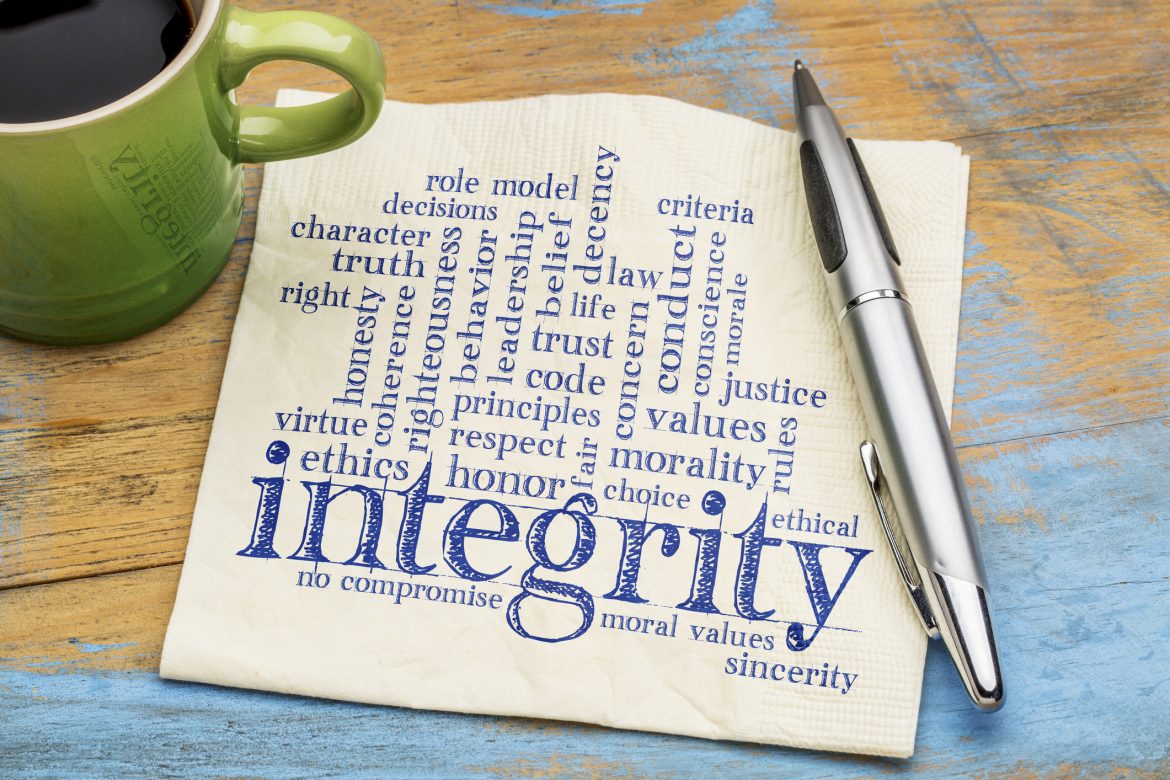
Integrity isn’t just an idea of basic ethics. As Ray Zinn tells us, in this Tough Things First podcast, a real commitment to integrity is a competitive advantage that leads to greater profits in business and benefits in life. (Watch Video
Rob Artigo:.. Ray, we have a great topic today. Integrity as the ultimate competitive advantage. So many leaders face pressure, as you know, to take shortcuts for quick wins. They cut corners or make promises, fudging numbers, or prioritizing short-term profits. In your experience, you did 37 years at Micrel. What are the most significant long-term costs beyond just financial penalties that companies may pay if they compromise on integrity, such as employee turnover, customer churn, or reputational damage?
Ray Zinn: Yeah. Well, one of our core cultures, as you know, we’ve talked about a number of times has been integrity. So the first one is honesty, it means telling the truth at all times. And then integrity is doing what’s right when no one’s watching. And I tell that story about the time that I was… It was in the winter and I was driving home from work. I’d been a little late, I had some issues that I was dealing with. And I ran the stop sign. And it was interesting that I looked around immediately to see if a cop was around or whatever. And it wasn’t a stoplight, it was just a stop sign. And anyway, my mind was not focusing on driving, I guess, and I just blew that stop sign.
I felt so bad about it that when I got home, because I said, “Well, just because a policeman’s not around doesn’t mean I shouldn’t be held responsible for the violation.” So I called the police department and told them that I had run a stop sign and that I was wanting them to send me a ticket so I could pay it. And that would clear my conscience to know that I had violated the law, but just because there was no one around policemen around to write the ticket, that I felt I still should owe that money.
Anyway, that person on the other end, they said, “What? Is this a crank call?” And I said, “No.” I gave them my name and my address and everything. And they said, “Are you kidding me?” And I said, “No, I’m just feeling guilty about running that stop sign.” Anyway, they said, “Well, we get enough crank calls and they just hung up on me.” So they thought it was a crank call, and it probably sounded like one, but at least I felt like I had done my duty by at least acknowledging that I had broken the law, even though no one had seen me break the law.
So integrity really is a lost art. But honestly, Rob, people don’t know how to be honest when no one’s watching. As you know, there’s a lot of investigations going on now with fraud, especially in Minnesota, and they’re trying to hide. They’re trying to hide the evidence. And so integrity really is an art that… And it is an art. It’s an art to be faithful and truthful and honest in the way you deal with everyone. And I think it’s gotten worse over the last 50 years in my life. Integrity has suffered. People don’t believe they have to have integrity. They figure if you can’t catch me, then I’m not guilty. And so they recently raided the election offices or something like that in Georgia, Fulton I think it was, because they’re looking for fraud.
And fraud really is the thing that causes companies to lose trust of their employees, of their customers, of their suppliers. And I remember a time when we had an issue with one of our customers where he was trying to reduce his inventory and he sent the product back as being defective. And so they were a good customer, and yet the parts were not defective. Well, I’m supposing that the product was good and they were trying to get rid of their inventory. So we took it back. We decided, okay, we take that product back. Even though it was not defective, we just figured that rather than getting into a battle with our customer, that we would just accept it. And we couldn’t put it back into inventory because the date code was… So the product was out of date, and so we couldn’t resell it. And it cost us a lot of money to actually throw that product away.
And so it’s tough sometimes. You really have to grit your teeth and bite your tongue, and even though it’s going to hurt you, you still got to do what’s right. And as the saying goes, the customer’s always right, even though they’re not always right, you got to treat them as though they’re always right. And your employees respect you for that. I mean, I know that many of the employees knew of that incident, and they respected us for doing it, even though it cost the company a lot of money. And you can’t call your customer a crook or a thief because you’ll lose them. So sometimes you just have to, even though it may hurt, you still got to do what’s right.
Rob Artigo: Well, I was going to ask you what practical steps or leadership behaviors have you seen that work best to embed integrity as core values in a company? But you talked a little bit about that. And I was also going to ask you about keeping promises and making ethical decisions and how that translates into a measurable competitive advantage. So you lost that product and you lost that money, but in the long run, doesn’t it translate to a profit because you build more trust with those customers, you get more business, and then in the long run, it pays for itself.
Ray Zinn: Yeah, that’s exactly what happened. Had we fought that return, we would’ve lost a customer, no question. So it wasn’t so much that… In fact, we had to bite our tongue because according to our analysis that we did on that lot of material that we accepted back, thoughts went through our mind about, man, this customer’s being dishonest, but rather than think the negative, we thought the positive. We said, well, okay, according to his measurements, they were defective and in our mind it was perfectly good.
I don’t want to get into the real details of it, but you’d have to question how much integrity the customer had to return that material because it was out of date. In other words, the date code on the material was dated, but it dated in his factory, not in ours, meaning that he had kept it a while and then the date was bad on it, meaning it was out of date for them. And so rather than for them eating the material because they couldn’t use it, they just returned it to us and we had to eat it.
Rob Artigo: Yeah. The net result, Ray, there, is that in the eyes of my crowd, this customer was knocked down a few notches in their integrity. So therefore, then you have to take some special steps with them because you’re a little concerned about them because that hurts their image in your eyes.
Ray Zinn: It does. I mean, you always run that risk. If you don’t have integrity yourself, then you run the risk of really causing your image to be defaced and you end up being hurt in the long run. So you’re not always going to win, even though you’re right. They say you’re right, but you’re dead right. You’re not always going to gain from every single transaction when you have to accept product back or accept the word of someone else when you know or you believe anyway they’re not being honest about it.
So the integrity is really taking it upon yourself the responsibility of being trusted and being fair, as you would. Anyway, that was one that I can remember that really concerned me because it was a big loss to our company, and it certainly looked like the customer was returning the product because it was out of date. In other words, the date code on it was old, and he just wanted to get it off his shelf and then put it back on us. So there’s a lack of integrity in our mind with our customer, but to have integrity ourselves, we went ahead and took it back.
Rob Artigo: Well, Ray, this has been a great podcast, and I want to remind the listeners that it is on video. And if you go to toughthingsfirst.com, you can click on this podcast, you can see where it says, watch the video. And you’ll go to Ray’s YouTube channel and watch the video there if you want to get this back. Because actually there’s a lot of really great information in here and actionable ideas and thoughts based on Ray’s long experience at Micrel with over 37 years as CEO of that microchip company.
So Ray, I want the listeners also to know that they should go to their favorite… Wherever they listen to this podcast, rate the podcast, give it five stars, five buckets of popcorn, whatever they do, and we’d love to have you give us feedback there because this is a very popular podcast and we’d like to boost its profile as much as possible.
And if you have any questions or comments, they’re always welcome. Ray Zinn is also on X, he’s on Facebook and LinkedIn, and of course he has the books, his first book being Tough Things First. There’s also the Zen of Zinn series 1, 2 and 3. And coming out very soon, going to print right now is the Zen of Zinn Daily Reader, which is going to be fantastic and I hope people will pick that up. On sale now, The Essential Leader: 10 Skills, Attributes, and Fundamentals That Make Up the Essential Leader, get that book right now because you can get that anywhere you want to purchase a book. Thanks again, Ray.
Ray Zinn: Thanks, Rob. Good to be with you.
