
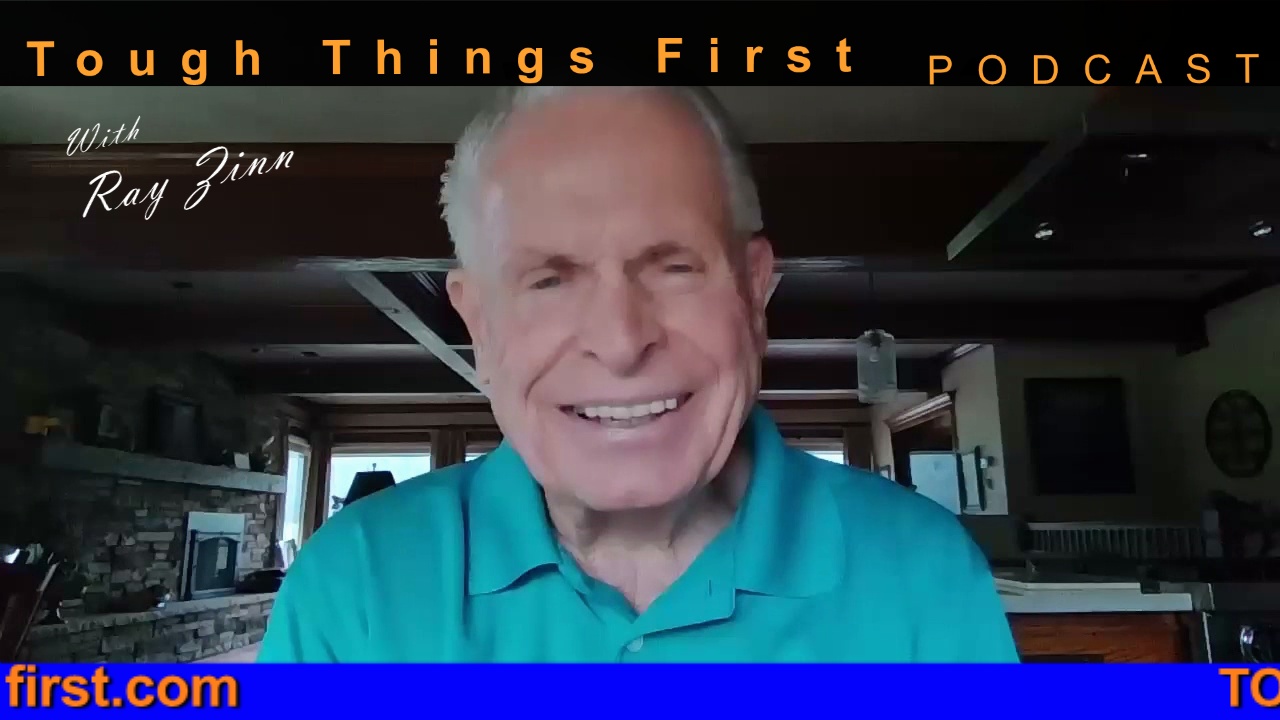
Businesses that intend to scale need teams of the right people to do it, but is there a difference between a functional team and a team built on work ethic and culture? In this Tough Things First podcast, Ray Zinn says of course the answer is obvious. (Watch Now!)
Rob Artigo: Ray, this is a special edition of the Tough Things First Podcast. We’re on video. If you’d like to watch it instead of just listen to it, you can go to toughthingsfirst.com and find this podcast by looking for the podcasts.
Right next to the lead-in for this podcast is a little link that says watch now. It’ll take you to Ray’s YouTube channel. You can watch that video and a whole lot more right there. So please check it out.
Today’s question comes from business leaders, managers, and creative team leaders as something like, “As I build this and scale my team, what kind of work ethic and culture should I intentionally create?” So Ray, you’ve done this successfully over decades. Where should a leader start in building that creative team and that ethic?
Ray Zinn: Develop a harmony of civility and caring for others, whether it be your competitor, whether it be your customers, your employees, just having that culture of civility.
At my company, Micrel, it’s the number three culture, which is respect and dignity of every individual. And so that having a culture of respect and dignity, not allowing condescending language, we allowed no vulgarity, we talked rationally with each other, respecting each other’s differences, understanding each other. And you can’t do that by sitting at the computer. You have to get around, you got to walk around, you got to interact with your customers, your competitors, your employees. And just having that culture of civility is what’s so important.
An important conversation in our news media today is the need for better civility. Again, with all the technology we have, AI and everything that is now enhancing our relationship with other people, civility’s got to come in there as kind of like number one almost.
Rob Artigo: Yeah. And don’t rely on AI to create civility for you. You’re going to have to do that using your own values and your own personal character. For creative team leaders, Ray, especially the writers and designers, developers out there, how do you balance freedom with discipline? That’s a question of values.
You’re balancing the creative freedom to do what you want as a person, be self-fulfilling or whatever, but how do you balance that with the discipline to stay within the framework of the values that you’ve built in as a team?
Ray Zinn: Don’t be offensive or defensive. I didn’t say offense like it’s offensive, mean don’t start out negative. Start out positive and be a character builder, not a character deteriorator or deterrer.
Whether you’re writing, whether you’re singing, whether you’re running a company with lots of employees, you want to have a culture or a atmosphere where people feel free to be expressive and to be open about their feelings and concerns. You don’t want them to be hiding or afraid to say anything for fear of retribution.
In fact, retribution should not even be part of the nature of your organization. It should be you want to get together, you want to bring people together because that’s the way a team works. A team works when they come together, not when they’re fighting each other. That’s not building a team. We need actually more of that team type spirit where we want to be together as opposed to not want to be together.
Rob Artigo: At Micrel, earlier you were talking about the values that you build into the team, the cultures that you intentionally baked into the framework of the organization that helped you succeed. This was a framework that you had come up with.
And other people could add or take away from that, because they can choose their own culture for their company, but it serves repeating to talk again about those cultures that you added in there that really builds in the values that help people first be free to create, but also operate within the framework of a team built on the same values.
Ray Zinn:
Well, I’ve heard this term used, healthy confrontation. It sounds good, but anytime there’s confrontation, it tends to deteriorate. I don’t know how you can have healthy poison, you know what I mean?
Rob Artigo: Right. Right, right. Oxymoron.
Ray Zinn: It’s kind of an oxy… Yeah. Right. So they try to couch it by saying as well it’s healthy confrontation. Well, I don’t know. Healthy bad stuff is, it’s kind of an oxymoron. So be careful because anytime you be confrontational, it tends to deteriorate. There could be healthy competition, but not healthy confrontation, if that makes sense.
Rob Artigo: Yeah. You want to have clarity on the work ethic, and the culture in the company too is really about making sure that it’s clear.
And then like you said, it’s not about the healthy competition. It’s okay to fight for your position or fight for your product or fight for what you want in the sense that you’re trying to make a good argument, show the value of it, but don’t go overboard and think that fighting means in some you have to be really aggressive and yell at other people. It’s like you can make your point without being disruptive and not a team player.
Ray Zinn: I call it raising your voice. I mean, there’s no need of it. If you have a good relationship or a healthy relationship with someone, you want to keep your tones more calm and more moderate as you would, as opposed to being angry and confrontational.
Rob Artigo: Thanks, Ray.
Join the conversation at toughthingsfirst.com. Your questions and comments are always welcome. Follow Ray on X, Facebook, and LinkedIn. And of course, pick up Ray’s books, the Tough Things First, The Essential Leader: 10 Skills, Attributes, and Fundamentals That Make Up the Essential Leader. And as you know, the Zen of Zinn series is already out there, 1, 2, and 3. And it now includes Ray’s new book, the Zen of Zinn Daily. Please pick it up.
Ray, we’ll have our listeners back and for another podcast coming up. Until then, do the tough things first, right?
Ray Zinn: That’s right. Do the tough things first.
