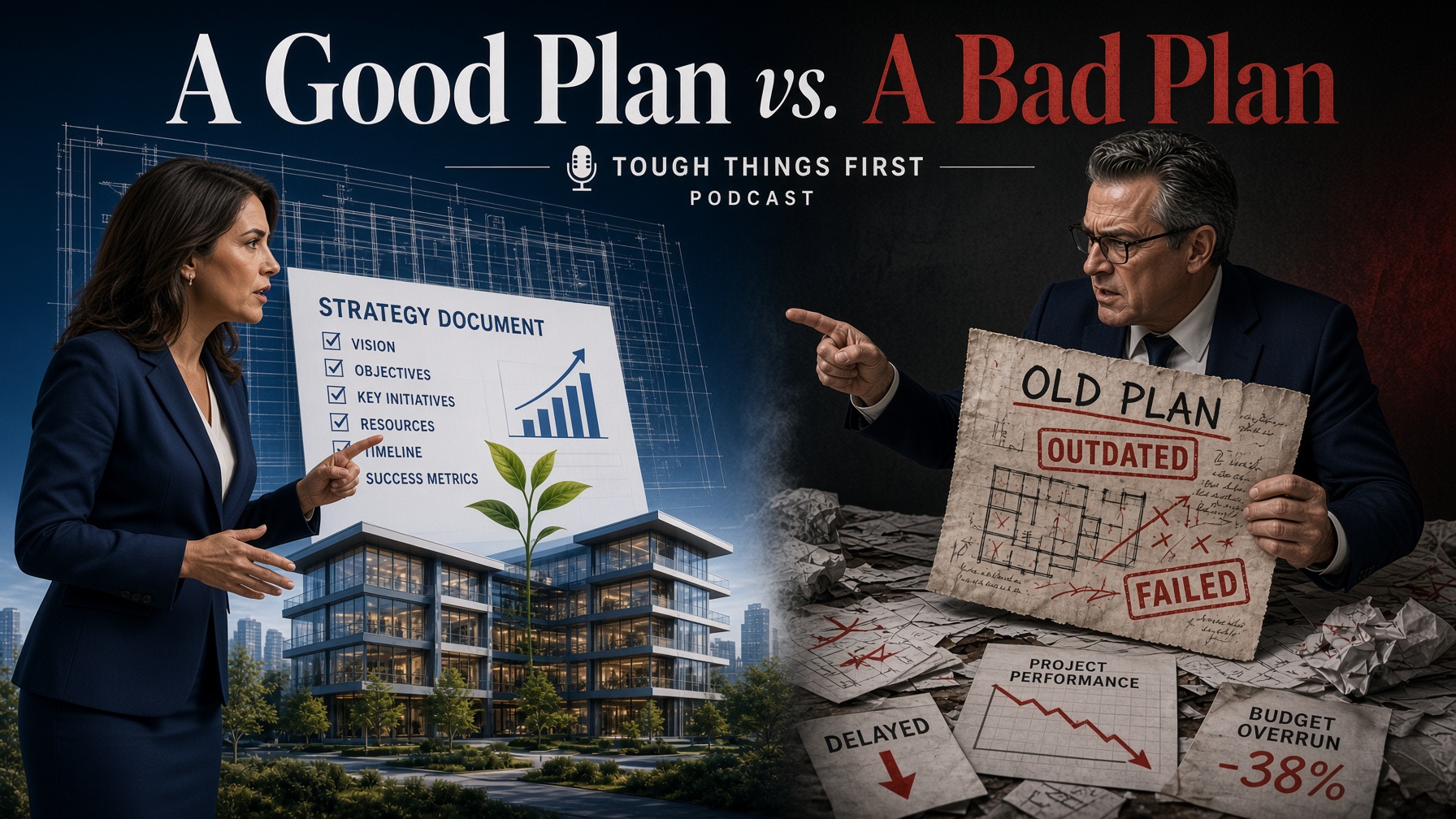
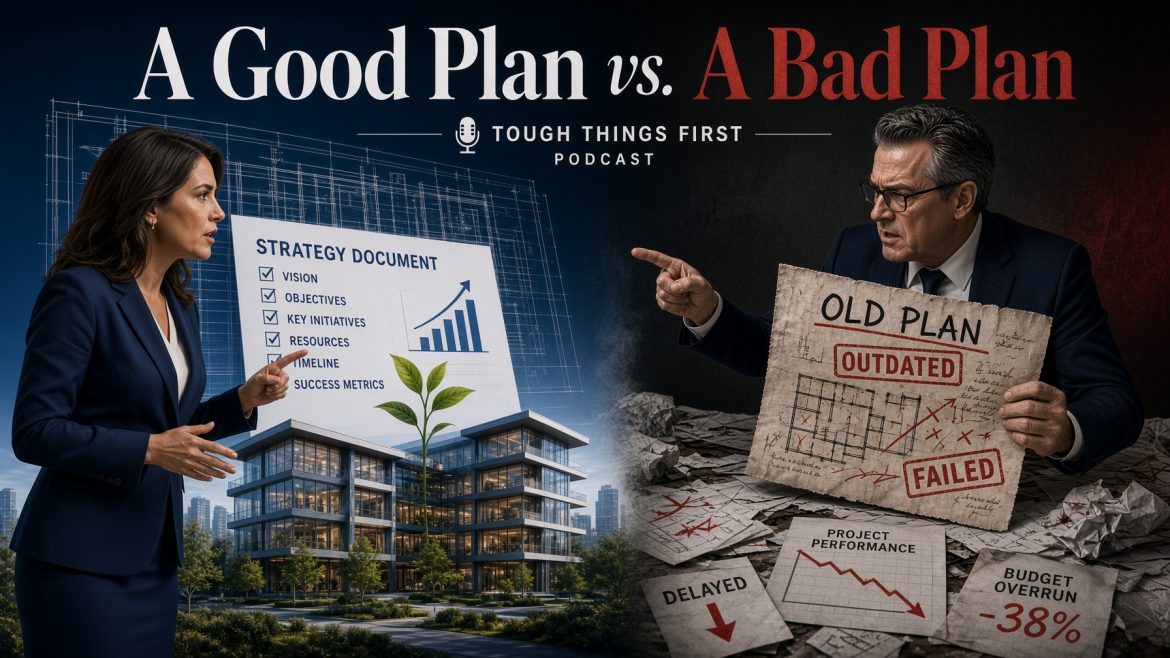
There’s a stark difference between doing something productive and just looking like you’re doing something productive. In this Tough Things First podcast, Ray Zinn has the good and the bad of the plan.
Rob Artigo: Today we’re looking at the difference between a good plan and a bad plan. Planning is something that comes up a lot on this podcast because it’s such a critical part of almost anything that you do, you should have an idea of the roadmap to get there. The real consequences of sticking with the wrong plan is a big part of what we’re talking about today. A good plan gives people a clear path, realistic assumptions, and a way to measure progress. A bad plan looks busy, consumes resources, and keeps everyone moving just in the wrong direction. One of the most expensive mistakes leaders can make is staying loyal to a plan that isn’t working simply because they’re committed to it. Am I right, Ray?
Ray Zinn: Well, a bad plan is not having a good plan. That’s basically what a bad plan is. I know that habits tend to form early in our lives and our plan is not to be thorough and genius in the way that we conduct our lives. Then that’s a bad plan. We look at these various catastrophes that are happening around the world, whether it be fires or other plagues and problems, and go back to talking about COVID, a bad plan is not having a good plan. And so that’s what we’re talking about here, is a good plan is the thing that drives success and not having a good plan is a bad plan. Does that make sense to you?
Rob Artigo: Sure does. Most people think of commitment. So if I’m going to commit to a plan, we talk about this is, anything worth starting is worth finishing, is something that you live by. And most people think of commitment as a virtue, but when the plan itself is flawed, the wrong assumptions, outdated conditions, goals that no longer make any sense at all, because sometimes that happens, you drop off a cliff, but you keep on going with the plan thinking that you can swim against the current and still make it to the other side, whatever the case may be. Dedication to the plan becomes a losing proposition in those situations. The team keeps executing. The costs mount. We know this, they pile up and the gap between where you are and where you need to be getting or where you need to get, gets wider and wider. How do you tell the difference between a plan that’s simply hard and a plan that’s actually bad, where the early signals that the plan itself, not just the effort is the problem?
Ray Zinn: Well, as I mentioned earlier, a bad plan is not having a good plan. So when we look at you’ve developed this plan, you’re going to grow revenue faster than margin and you’re going to say, “I’m going to lose money for the first few years.” That’s already a bad plan. And so sticking with it is a sign of a doomed company. And so if there’s something that’s not good about your plan that you discover early on, pivot, change, learn from your mistakes. As they say, “Yesterday is history, tomorrow’s a mystery, today’s the present, that’s why they call it a gift.” So don’t keep doing something that is a losing proposition. We all have good days and bad days or good years and bad years, but learn from them. Don’t repeat them. Change. Be willing to pivot. Don’t just stick with the plan just because that’s what you promised your investors or promised your wife or whatever. Don’t just stick with a bad plan because that’s a bad plan. Remember, we said a bad plan is not having a good plan.
Rob Artigo: What are the practical consequences then that you’ve seen when a leader refuses to abandon a plan that is not working?
Ray Zinn: I think that it’s customer centric plans where you don’t have a good policy regarding your customers, you don’t have a good customer support. They see that as you’re focusing on your company and not on them as a customer. Having a customer centric plan is where the company does whatever it needs to do to take care of the customer. We see that all the time in the products we buy. Thank goodness like on Amazon, if you don’t like something, you return it in 30 days. I like that because oftentimes we get something and it turns out not to fit our needs and you’re able to return it. So that to me is a good plan is having that 30 day return policy. And so it maybe costly, but in the long run it’s going to be one that keeps your customers coming back.
Rob Artigo: I guess the core point is pretty simple here. It’s also hard for some people to practice. A good plan is worth defending. A bad plan is worth abandoning.
Ray Zinn: Abandoning, exactly.
Rob Artigo: So staying dedicated to the wrong plan becomes a prior commitment… Because of prior commitments, doesn’t demonstrate loyalty. It demonstrates a refusal to deal with reality. What’s one question a leader should ask regularly to make sure the plan they’re executing is still the right one?
Ray Zinn: Is it a plan that’s going to be enduring? Is it going to be an enduring plan or is it one that’s going to be here today gone tomorrow? That’s the thing you ask yourself. How enduring is that plan that I currently am considering doing? If it’s a short term plan, then it could be considered bad because you’re just looking at the near term, not the long term. So is your plan have a long term proposition to it or is it just strictly get in and get out, pump and dump?
Rob Artigo: Make note of all the red flags you see so that you are properly keeping things in context. I’d like to let the listeners know they can join the conversation at toughthingsfirst.com. Questions and comments are always welcome there. Follow Ray at X and Facebook and LinkedIn and of course pick up Ray’s books, Tough Things First: The Essential Leader and the Zen of Zen series one, two, and three, including Ray’s new book, Zen of Zen Daily. Until next time, do the tough things first, right Ray?
Ray Zinn: Let’s do it.
